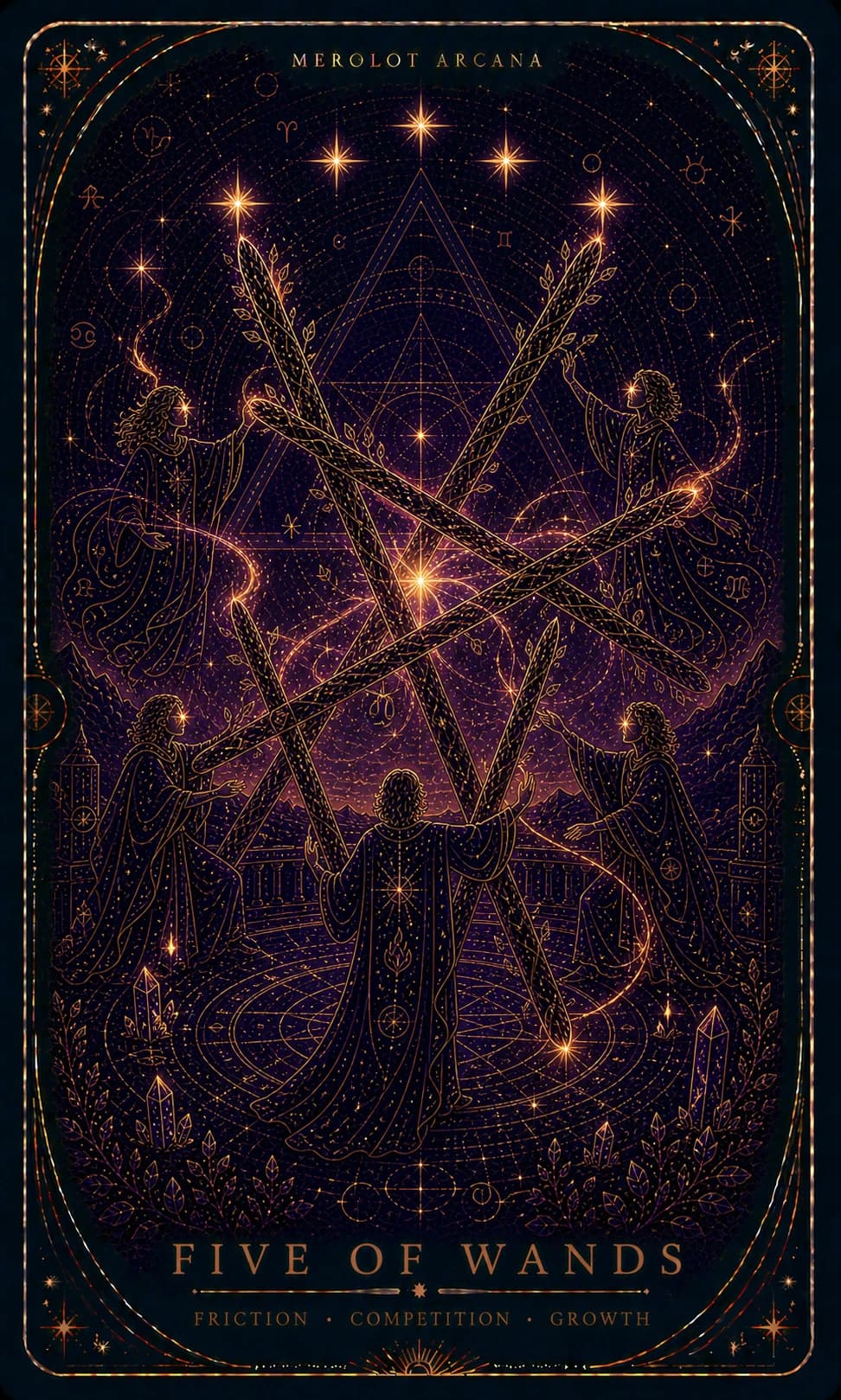
Five of Wands
- Competition
- Brainstorming
- Dynamic Energy
- Ambition
- Diversity
- Sport
- Growth
- ELEMENT
- Fire
- PLANET
- Saturn
- NUMBER
- 5
- ARCANA
- Minor
I.THE CARD'S SCENE
The Five of Wands depicts a lively moment in which five figures cross their long wands in the air, forming a scene of struggle. Rather than a destructive battle, the image suggests a training session or a competitive game where limits are being tested. The wands meet at a single glowing point right at the center, as though every effort were flowing toward the same core. This card stands for the dynamic and sometimes chaotic nature of life. At this stage of the wand suit, the clash of ideas and the outward release of energy take center stage. It represents a growth phase in which a person tests their own strength and matures through social interaction.
II.UPRIGHT AND REVERSED
When the Five of Wands appears, it signals a period of healthy competition and dynamic tension. You may find yourself in a high-energy environment where diverse opinions clash. This is an invitation to sharpen your skills, defend your ideas, and embrace the spark of debate. It encourages you to view challenges as opportunities for personal growth and to find your unique voice amidst the surrounding noise.
- Competition
- Brainstorming
- Dynamic Energy
- Ambition
- Diversity
- Sport
- Growth
In reverse, the Five of Wands suggests a shift toward harmony after a period of discord. It represents an opportunity to move past petty grievances and find common ground. If you have been feeling overwhelmed by conflict, this is your signal to seek inner peace or initiate a truce. Focus on cooperation rather than competition, and use this time to streamline your energy toward shared, constructive goals.
- Conflict
- Ego Clashes
- Chaos
- Disorganization
- Tension
Note: Merolot web spreads never use reversed cards; the reversed meaning is given for anyone studying the card.
III.SYMBOLISM
The five figures' matching dark violet and gold garments show that this struggle springs not from personal hostility but from a shared energy — everyone is part of the same game. The wands in their hands are both weapon and tool at once, pointing to the constructive power hidden in conflict. The geometric circle beneath their feet is a reminder that a hidden order lies under the chaos, that the struggle is part of a learning process rather than something random. That the wands meet at a single point of light stands for how efforts coming from different directions can, in the end, converge on a shared purpose.